
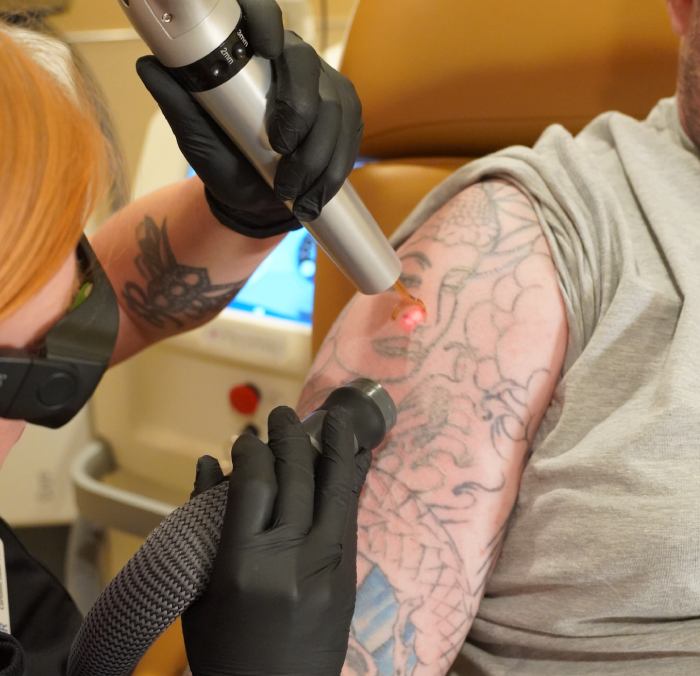
One of the first questions we get about laser tattoo removal is:
“How many sessions will I need?”
The honest answer? It depends.
Tattoo removal isn’t one-size-fits-all. The speed and success of removal comes down to several key factors — not just the laser itself. At CLEO, we believe in setting clear expectations from day one, so you know exactly what impacts your results.
Here’s what actually determines how fast your tattoo fades.
1. Ink Color Matters
Not all ink responds the same way to laser energy.
- Black ink is typically the easiest to remove because it absorbs laser wavelengths effectively.
- Dark blue and red often respond well.
- Green, teal, and light colors can take longer and may require more sessions.
Modern laser systems are designed to target a wide range of pigments, but some colors simply require more time and consistency.
2. Age of the Tattoo
Older tattoos often fade faster than newer ones. Over time, your body has already started breaking down some of the ink particles naturally. That means the laser has less work to do compared to a fresh, densely packed tattoo.
3. Ink Depth & Saturation
Professional tattoos tend to be more deeply saturated and placed evenly into the dermis. While that often means cleaner artwork, it can also mean more sessions to fully clear.
Amateur tattoos sometimes fade faster because the ink is:
- Less concentrated
- Placed unevenly
- Not as deeply embedded
But every tattoo is unique — which is why consultation is key.
4. Placement on the Body
Circulation plays a bigger role than most people realize.
Areas with strong blood flow — like the upper body — often respond faster because your lymphatic system helps flush away fragmented ink particles.
Tattoos on:
- Hands
- Feet
- Ankles
…may take longer simply due to slower circulation.
5. Your Immune System
Laser tattoo removal works by breaking ink into tiny particles. After that, your body does the rest.
A healthy immune system helps clear ink more efficiently over time. Hydration, overall health, and spacing treatments properly all support this process.
This is why rushing sessions too close together doesn’t speed results — your body needs time to process.
Why Spacing Between Sessions Matters
Tattoo removal treatments are typically spaced about 6–8 weeks apart. This isn’t arbitrary — it gives your body time to:
- Break down fragmented ink
- Flush it through the lymphatic system
- Heal properly before the next session
More frequent treatments don’t mean faster removal. Proper timing leads to better results.
The CLEO Approach
At CLEO, we use advanced laser technology designed to safely target multiple ink colors while protecting surrounding skin. But just as important as the equipment is the strategy.
We evaluate:
- Ink color and density
- Tattoo age
- Skin type
- Placement
- Your goals (full removal vs. fade for cover-up)
Because successful tattoo removal isn’t just about blasting ink — it’s about precision and patience.
Bottom Line
Tattoo removal is a process. The timeline depends on several factors, but with the right technology and a customized treatment plan, consistent fading is achievable.
If you’re ready to start the removal process — whether it’s complete clearance or lightening for a cover-up — our team in Minneapolis, Detroit, St. Louis and Atlanta will build a plan tailored to you.
**Book your consultation and let’s map out your removal journey the right way.**



Leave a comment
This site is protected by hCaptcha and the hCaptcha Privacy Policy and Terms of Service apply.