
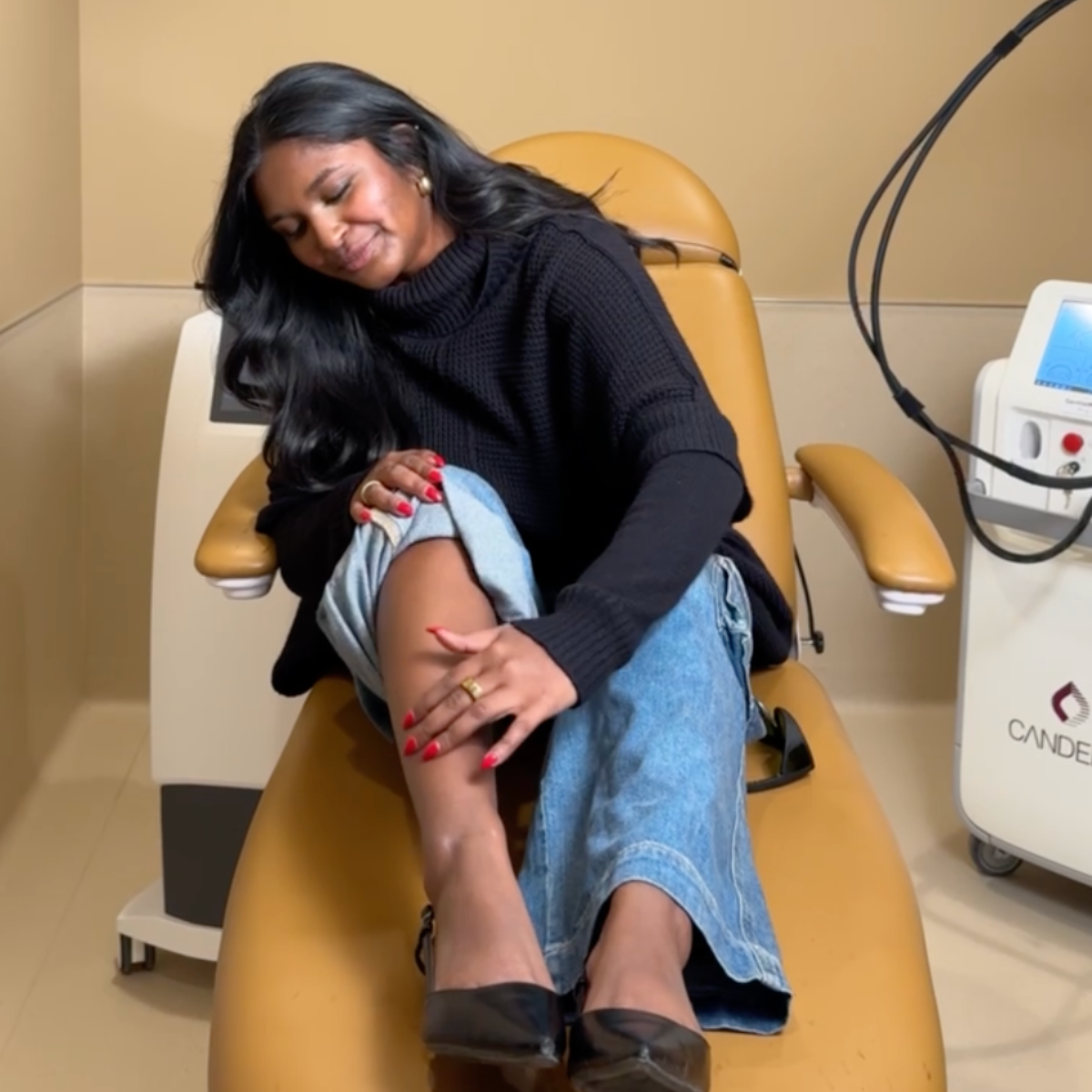
If you have thick, dark hair, you probably know the routine. Stubble shows up hours after you shave, wax appointments hurt, and ingrown hairs seem to follow you everywhere. So it's easy to assume your hair is simply too stubborn for laser hair removal to handle.
In reality, the opposite is usually true. Dark, coarse hair is often the hair that responds best to laser. The same qualities that make it so hard to manage with a razor are exactly what the laser is designed to target.
Here's the science behind why laser hair removal for coarse hair and dark hair works better than you might think.
Why Dark Hair Is the Ideal Target for Laser
Laser hair removal works through a process called selective photothermolysis. The laser emits light at a wavelength that's absorbed by melanin, the pigment that gives hair its color. The hair absorbs that light, converts it into heat, and carries the heat down into the follicle, where it damages the follicle's ability to grow new hair.
In other words, pigment is the target. The laser needs something to "see," and darker hair holds more melanin. More melanin means the hair absorbs light more efficiently and delivers more heat where it counts.
That's why lighter hair colors, like very light blonde, red, gray, and white, are the real challenge for laser. They have little pigment to absorb the light. Dark hair, on the other hand, gives the laser a clear, strong target.
Why Laser Hair Removal Works on Coarse Hair
Thickness works in your favor, too. A coarse hair is wider, which means more pigment packed into each strand and a bigger target for the laser to hit. A thicker hair absorbs more light and holds onto the heat long enough to carry it down to the follicle.
Coarse hairs are also terminal hairs, the mature, deeply rooted hairs found on areas like the bikini line, underarms, and legs. Lasers are designed to treat exactly this type of hair. The fine, light "peach fuzz" on your cheeks or arms, called vellus hair, is actually much harder to treat because it's so thin and carries so little pigment.
So if your hair is thick and dark, you're often starting from an advantage. Many people with coarse hair notice a visible difference after their first few sessions, though everyone's results depend on their hair, skin, and the treatment area.
The Real Factor: Contrast Between Hair and Skin
If dark hair is the ideal target, why do you hear that laser “doesn’t work” for some people with dark hair? The answer usually isn’t the hair. It’s the skin around it.
Your skin contains melanin too. The more contrast there is between your hair and your skin, the easier it is for the laser to focus its energy on the hair. When skin and hair are both rich in pigment, the wrong laser can’t tell the difference as well, which raises the risk of irritation or discoloration.
Dark hair on deeper skin tones
This is where technology changes everything. Longer wavelengths, like the 1064 nm Nd:YAG laser, travel deeper into the skin and interact less with the pigment at the surface. That allows the energy to bypass the skin’s melanin and reach the hair follicle below. With the right wavelength and an experienced provider, laser hair removal can be safe and effective for dark hair on deeper skin tones, too.
Older or less versatile devices are often behind the idea that laser only works on light skin with dark hair. That’s no longer the full story.
Why clients with deeper skin tones choose CLEO
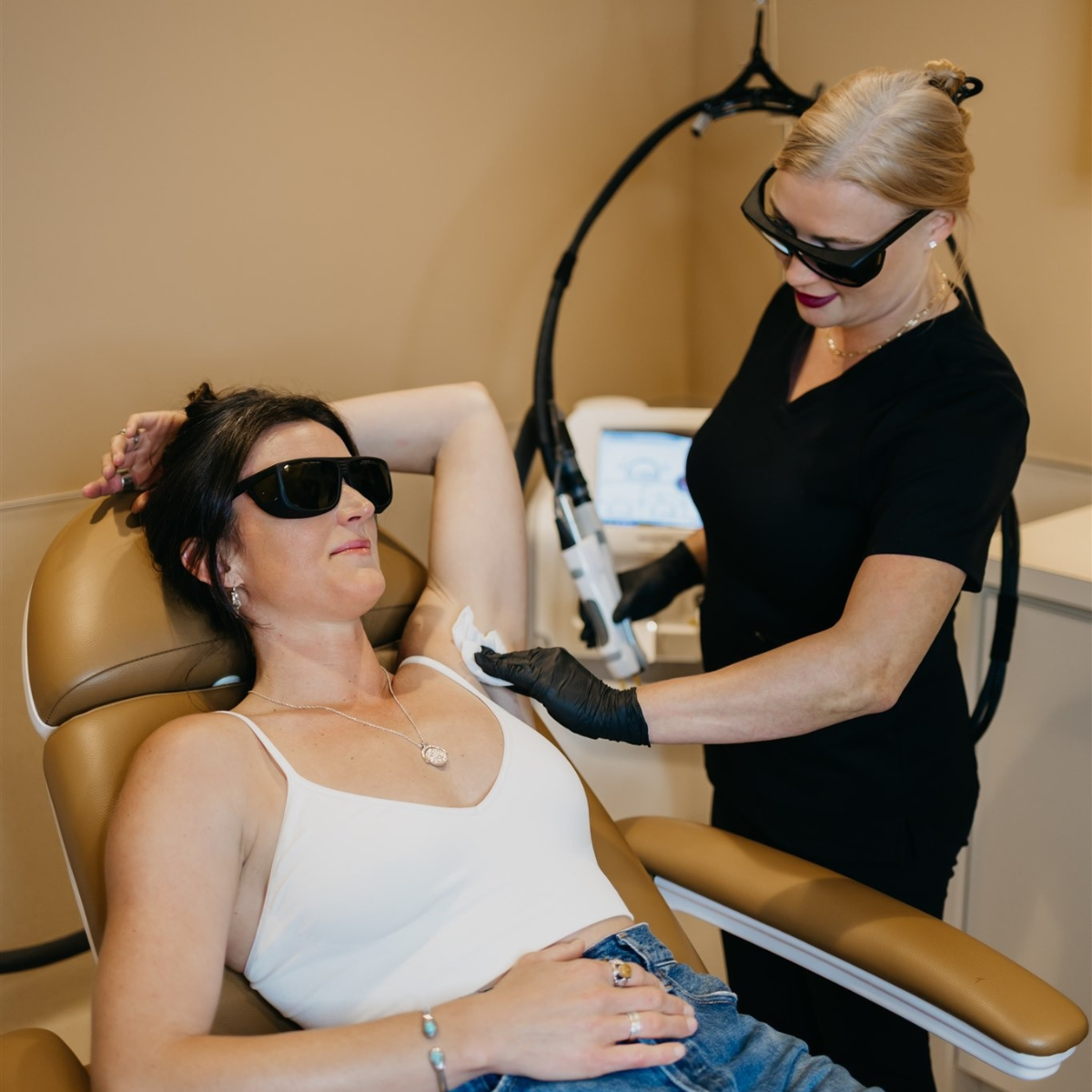
At CLEO, treating deeper skin tones safely is built into how we work. We use the Candela GentleMax Pro Plus, which includes the 1064 nm Nd:YAG wavelength, so your provider can use the wavelength suited to your skin rather than adapting a one-size-fits-all device. Integrated cooling protects the skin’s surface with every pulse.
Just as important is who’s holding the laser. Our providers assess your skin tone, hair color, and hair thickness before each session and adjust your settings as your treatment progresses. They’ll walk you through what to expect for your skin, so you can start treatment feeling informed and confident, not uncertain. You'll get a clear plan and straightforward expectations from the start, with single sessions and packages of 4 or 8 available.
The Bonus for Coarse Hair: Fewer Ingrown Hairs and Razor Bumps
Coarse and curly hair is especially prone to ingrown hairs. When a thick hair is shaved, it's left with a sharp, blunt edge. As it grows, it can curl back or grow sideways into the skin, which triggers redness, tender bumps, and sometimes dark marks that linger long after the bump is gone. Waxing can cause the same problem as new hairs work their way back to the surface.
Laser addresses the issue at its source. Fewer hairs growing means fewer hairs that can get trapped under the skin, and the hairs that do regrow are often finer.
For many people with dark, coarse hair, smoother skin with fewer bumps ends up being the result they appreciate most, even more than skipping the razor.
What to Expect When Treating Dark or Coarse Hair
You might feel it a little more at first
Because dark, coarse hair absorbs more energy, your first sessions may feel more noticeable than they would for someone with finer hair. Most people describe it as a quick snap or warm pinch. Built-in cooling helps keep things comfortable, and many clients find each session feels easier as the hair thins out.
Shedding can look like regrowth
In the one to three weeks after a session, treated hairs gradually push out of the follicle and fall away. With dark hair, this can look like stubble or small dark dots under the skin. That's normal, and it's a sign the treatment is doing its job. Resist the urge to tweeze.
Results build over a series
Hair grows in cycles, and the laser works best on hairs in their active growth phase. Only some of your hair is in that phase at any time, so treatments are spaced several weeks apart to catch each wave. Your provider will recommend a plan based on your hair, skin, and treatment area.
Shave, don't wax, between sessions
Shaving is fine and recommended before each appointment, since it leaves the root in place for the laser to target. Skip waxing, plucking, and epilating during your treatment series, and protect treated areas from the sun.
Dark and Coarse Hair FAQs
Does laser hair removal work on thick hair?
Yes. Thick, coarse hair carries more pigment and gives the laser a larger target, so it typically responds very well. Fine, light hair is usually the harder type to treat.
Is laser hair removal better for dark hair?
Dark hair is the ideal target because laser works by absorbing light through the pigment in the hair. The more melanin a hair has, the more effectively it absorbs the laser's energy.
Can I get laser hair removal if I have dark hair and dark skin?
Yes, with the right laser and an experienced provider. The 1064 nm Nd:YAG wavelength bypasses much of the pigment at the skin's surface to reach the follicle, making it a safe option for deeper skin tones.
Does laser hair removal help with ingrown hairs?
For many people, yes. Reducing the number of hairs that grow back means fewer hairs that can get trapped under the skin, and regrowth is often finer and less likely to curl inward.
Does laser hurt more on coarse hair?
It can feel more noticeable during your first sessions, since coarse hair absorbs more energy. Most people describe it as a quick snap, and it often feels milder as treatment progresses.
How many laser sessions will I need for coarse hair?
It depends on your hair, skin, and the treatment area. Most people need a series of sessions spaced several weeks apart to catch hair in its active growth phase, and your provider will recommend a plan at your first visit.
Your Hair Isn't Too Stubborn for Laser
The thick, dark hair that makes shaving and waxing such a chore is exactly what laser is built to target. With the right technology and a provider who tailors every session to you, it's often the hair that responds best.
Ready to see what laser can do for your hair? Book your laser hair removal appointment at your nearest CLEO studio, and we'll build a plan around your skin and hair.

Leave a comment
This site is protected by hCaptcha and the hCaptcha Privacy Policy and Terms of Service apply.